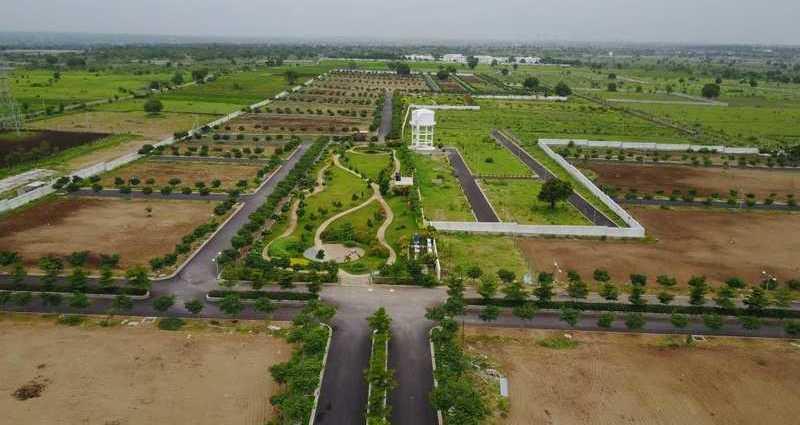
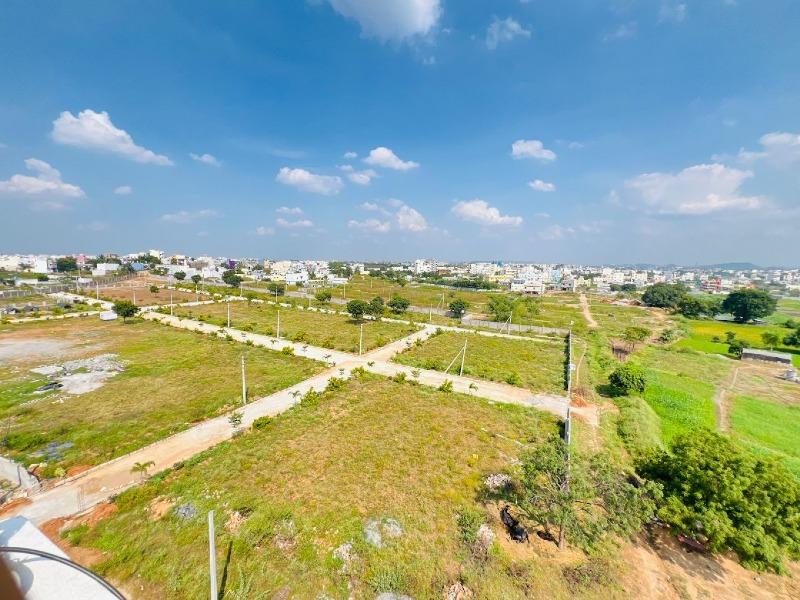
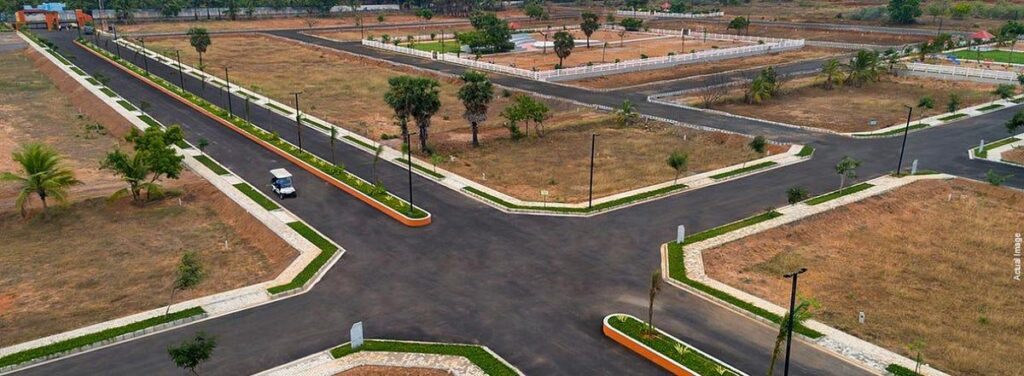
Common Open-Plot Investment Scams in Hyderabad and How to Avoid Them
A practical guide to recognizing plot scams, checking official records and completing independent legal due diligence.
Open plots remain a popular real-estate investment option in Hyderabad. Buyers are attracted by the possibility of long-term land appreciation, lower maintenance requirements and the flexibility to build or resell later.
However, plot purchases can also involve serious risks.
Unlike a completed apartment, an open plot may appear simple: a piece of land, a layout map and a registration document. In reality, buyers must verify ownership, survey boundaries, layout approval, land use, road access, encumbrances, prohibited-property status and several other factors.
Fraud does not always look like an obviously fake transaction. It may appear through a professional brochure, branded site office, persuasive salesperson, discounted launch price or an approval number printed prominently in an advertisement.
This guide explains the common open-plot investment scams in Hyderabad, the warning signs buyers should recognise and the official checks that can reduce risk.
Important principle: Never invest in a plot based only on a brochure, salesperson, online advertisement or site visit. Every important claim must be independently verified against the exact survey number and plot.
Why Open-Plot Transactions Require Extra Care
Several independent legal and planning questions must be answered before a plot can be considered safe:
- Does the seller legally own the land?
- Does the ownership chain cover the entire property?
- Is the exact survey number included in the approved layout?
- Is the plot shown in the approved plan?
- Has the same plot already been sold or promised to someone else?
- Is the land affected by acquisition, litigation or government restrictions?
- Does the plot have lawful road access?
- Is the land use suitable for residential development?
- Is the project registered with TG-RERA where registration is legally required?
- Do the physical boundaries match the documents?
A layout approval, registration document or RERA number may answer only part of the overall question. No single document replaces complete legal due diligence.
1. Fake HMDA or DTCP Approval Claims
One of the most common marketing claims is:
“This is an HMDA-approved layout.”
The claim may be completely false, partially true or misleading.
A promoter may show:
- An application acknowledgement instead of final approval
- A preliminary permission presented as final layout approval
- An approval belonging to a neighbouring project
- An approval covering different survey numbers
- A modified layout that does not match the sanctioned plan
- A forged layout-permission number
- A brochure saying “approval in process”
How to avoid this scam
Ask for the complete approval order and sanctioned layout plan. Verify:
- Approval or LP number
- Promoter or landowner name
- Village, mandal and district
- Survey numbers and subdivisions
- Total approved extent
- Plot number and dimensions
- Roads, parks, open spaces and utility areas
- Approval conditions and current status
HMDA states that building, occupancy and layout permissions can be accessed through its EXTERNALDevelopment Permissions Management System. Telangana has also introduced EXTERNALBuildNow as its unified building and layout approval system.
Do not accept a screenshot supplied by the seller as final proof. Search the official record yourself or have a qualified professional verify it.
2. Selling an Unapproved Layout as an “Investment Venture”
Some agricultural land is divided into small plots using an unofficial sketch. Roads may be marked with stones, flags or temporary fencing, but the subdivision may not have valid layout approval.
The promoter may avoid the word “layout” and instead use phrases such as:
- Farm plots
- Weekend plots
- Future residential plots
- Investment land
- Pre-launch venture
- Proposed HMDA layout
- Gram Panchayat plots
The risk is that the buyer may receive a registered share or parcel of land without a legally approved residential plot. Future construction, road access, financing, resale and municipal services may become difficult.
How to avoid this scam
Confirm what is legally being sold:
- An individually identifiable approved plot
- An undivided share in a larger survey number
- Agricultural land
- A farm plot under a permitted scheme
- A plot in an unapproved subdivision
Registration of a sale deed does not automatically convert an unapproved subdivision into an approved residential layout.
3. “Gram Panchayat Approved” Presented as HMDA or DTCP Approval
Buyers sometimes hear that a layout is “Panchayat approved,” followed by an assurance that this is equivalent to HMDA or DTCP approval.
It is not safe to assume that all approvals are interchangeable. The competent planning authority depends on the property’s location, jurisdiction and applicable law.
A local document, tax receipt or Panchayat reference may not establish that a residential layout has received all required planning approvals.
How to avoid this scam
Identify the competent authority for the exact location. Ask a planning professional or property lawyer to confirm:
- Which authority has jurisdiction
- What permission was legally required on the approval date
- Whether the document presented is final and valid
- Whether later regularisation or additional permission is required
Never rely only on the approval description printed in a brochure.
4. Fake or Misused TG-RERA Registration Numbers
Promoters may display a TG-RERA number to make a project look trustworthy. Problems can include:
- A completely invented number
- A number belonging to another project
- A registration covering a different project phase
- Expired or revoked project details
- Advertising by an unregistered agent
- Project information that does not match the sanctioned layout
TG-RERA provides an official facility to EXTERNALsearch registered projects and agents. Its published guidance states that registered-project information can include sanctioned plans, layout plans and promoter disclosures.
How to avoid this scam
Search the number on the official TG-RERA website and compare:
- Project name
- Promoter name
- Agent details
- Location and survey numbers
- Registration validity
- Approved plan
- Project status and updates
- Complaints or regulatory orders, where available
Remember that RERA registration and layout approval serve different purposes. One should not be treated as a substitute for the other. Also, RERA applicability can depend on the project’s facts and statutory exemptions; obtain legal advice when uncertain.
5. Duplicate Sale of the Same Plot
A plot may be sold, agreed to be sold or allocated to more than one buyer. This can happen through:
- Multiple agreements executed before registration
- A prior registered sale that is concealed
- Conflicting plot numbering between brochure and approved plan
- Sale by different family members claiming ownership
- Sale through a cancelled or invalid power of attorney
- Promoter allotment records that do not match title records
Warning signs
- Seller refuses to provide original documents
- Plot number has been manually altered
- Boundaries differ between documents
- Another person claims possession
- Neighbours identify a different owner
- Seller pressures you to register immediately
How to avoid this scam
Obtain a current encumbrance certificate for the correct period and property details. Have a lawyer trace the title chain and verify prior transactions directly from certified records.
An encumbrance certificate is useful, but it may not reveal every unregistered agreement, pending claim or factual possession dispute. Combine document review with physical inspection and local enquiry.
6. Forged Ownership Documents or Seller Impersonation
Fraudsters may use fabricated sale deeds, identity documents, death certificates, legal-heir documents or powers of attorney. In other cases, someone may impersonate the true owner—particularly when the actual owner lives outside Hyderabad or abroad.
How to avoid this scam
- Meet the owner personally where possible
- Verify identity against original documents
- Compare names consistently across title and revenue records
- Confirm photographs and signatures in prior documents
- Verify the owner’s contact details independently
- Scrutinise powers of attorney for scope, validity and revocation
- Obtain legal-heir and succession verification where the owner is deceased
- For company-owned land, verify corporate authorisation and signatory powers
Payment should be made only to the legally verified seller or as formally documented by your lawyer.
7. Defective or Incomplete Title Chain
A seller may have a recent registered document but still lack a clear and marketable title. Common problems include:
- Missing link documents
- Unregistered family settlements
- Unresolved inheritance claims
- Minor’s property sold without necessary permission
- Joint-family land sold without all required parties
- Pending partition disputes
- Incorrect survey extent
- Title derived from a questionable power of attorney
How to avoid this scam
Ask a property lawyer to issue a written title-search or legal-opinion report after examining the relevant period and all link documents.
Do not treat the latest sale deed alone as proof of perfect title.
8. Government, Assigned or Prohibited Land Sold as Private Property
Land can be affected by government ownership, assignment conditions, acquisition, endowment claims, wakf issues, ceiling proceedings or other legal restrictions.
A seller may provide a private document and claim that registration is possible, but registration eligibility alone does not always settle the underlying title.
The Telangana Registration and Stamps Department provides an official EXTERNALprohibited-properties search. Buyers should check the exact district, mandal, village and survey details.
How to avoid this scam
- Verify prohibited-property status
- Examine revenue and survey records
- Check government acquisition notifications
- Investigate endowment or wakf claims where relevant
- Confirm whether the land is assigned and whether transfer restrictions apply
- Ask a lawyer to check pending court cases and administrative proceedings
Government databases can be updated or corrected. A clean online result should not be the only title check.
9. Mortgaged Plots or Land Under Project Finance
In approved layouts, some plots or portions may be mortgaged to the planning authority as security for completing development obligations. Land may also be mortgaged to a bank or lender.
A promoter may attempt to sell a mortgaged plot without proper release.
How to avoid this scam
Compare the plot with the sanctioned layout and approval conditions. Ask for:
- Mortgage details shown in the approved plan
- Release order for the specific plot
- Bank no-objection certificate, if applicable
- Updated encumbrance certificate
- Confirmation from the competent authority
Do not accept a general assurance that “the release will come later.”
10. Selling Parks, Roads or Open Spaces as Plots
An unscrupulous seller may redraw a sanctioned layout and create extra saleable plots in areas reserved for:
- Parks and playgrounds
- Roads
- Utility space
- Social infrastructure
- Common parking
- Water or sewerage infrastructure
- Mortgaged plots
BuildNow’s official FAQs describe mandatory open-space and utility requirements in layouts, showing why sanctioned common areas cannot simply be converted into private plots.
How to avoid this scam
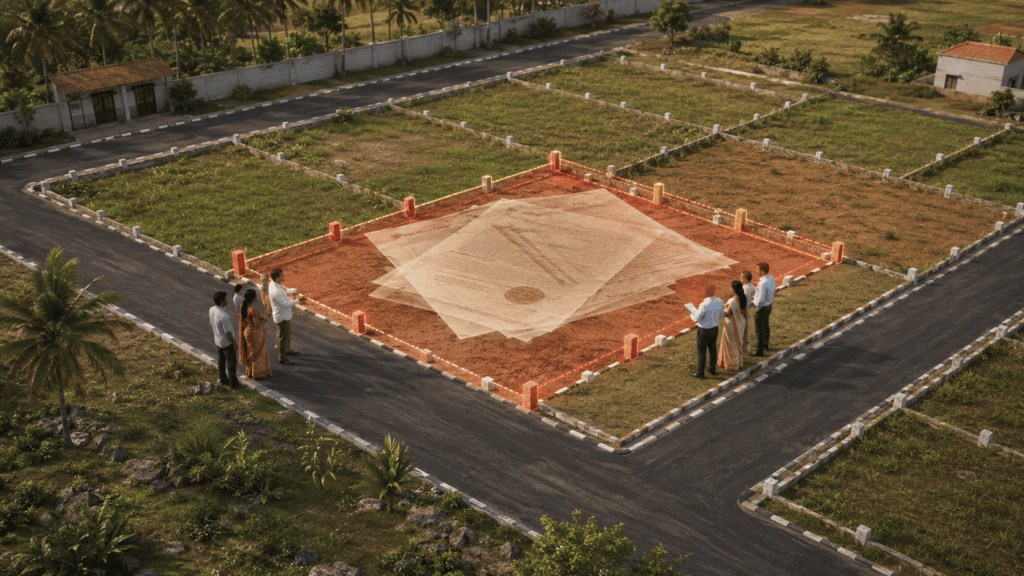
Overlay the offered plot on the officially sanctioned plan. Verify that the plot number, shape, dimensions and boundaries match exactly.
If the brochure contains more plots than the approved plan, stop the transaction until the discrepancy is professionally resolved.
11. Survey-Number and Boundary Manipulation
The plot shown at the site may not fall within the survey number mentioned in the documents. Boundary stones can be placed incorrectly, and a salesperson may show attractive roadside land while the registered property lies elsewhere.
How to avoid this scam
Engage a licensed surveyor to identify the plot using official survey records, fixed boundary points and the sanctioned layout.
Confirm:
- Survey number and subdivision
- Plot coordinates and measurements
- Four boundaries
- Approach-road location
- Overlap or shortage in extent
- Encroachments
- Match between physical site, sale deed and approved plan
A site visit without professional measurement is not enough.
12. No Legal Approach Road
A plot may be physically reachable through a neighbour’s land, temporary path or informal village track, but it may not have legally documented access.
After surrounding land is sold or fenced, the buyer can become landlocked.
How to avoid this scam
Verify that the approach road:
- Appears in the sanctioned layout or title documents
- Connects legally to a public road
- Has adequate approved width
- Is physically available without encroachment
- Is not merely promised for the future
Road access should be checked in both documents and on the ground.
13. Lake, Nala, Buffer-Zone or Flood-Risk Plots
Low-priced plots may be located near lakes, nalas, drainage channels or low-lying areas. A dry site in summer can still face flooding during heavy rain.
The promoter may fill the land, hide the natural drainage path or claim that a future retaining wall will solve the issue.
How to avoid this scam
- Check master-plan and water-body maps
- Verify full-tank-level and buffer restrictions
- Inspect the site during or after rains if possible
- Review surrounding ground levels and drainage
- Speak with long-term local residents
- Obtain planning and environmental advice
Do not rely solely on a raised plot level or newly laid roads.
14. Misleading Distance and Infrastructure Claims
Advertisements commonly promise:
- Five minutes from the airport
- Adjacent to Future City
- Beside the Regional Ring Road
- Walking distance from a metro station
- Near an international company
- Guaranteed government project nearby
The quoted distance may be measured in a straight line rather than by road. The proposed infrastructure may have no final alignment, approval or construction timeline.
How to avoid this scam
- Measure driving distance using the actual approach road
- Confirm the relevant government announcement
- Check whether the alignment is preliminary or final
- Verify whether the plot has access to the new road
- Distinguish operational infrastructure from proposals
Infrastructure can support appreciation, but speculative claims should not replace plot-level due diligence.
15. Guaranteed Returns, Buyback and “Double Your Money” Schemes
Land investments are sometimes marketed with assured appreciation, fixed buyback prices or guaranteed doubling periods.
No legitimate advisor can guarantee future land prices. A buyback promise is only as reliable as the written contract, legal enforceability and financial capacity of the party making it.
Warning signs
- Guaranteed percentage return
- Verbal buyback assurance
- Post-dated cheques presented as security
- Pressure to invest before a “price revision”
- Referral commissions that dominate the sale
- No explanation of title, approvals or resale demand
How to avoid this scam
Evaluate the property on its legal and economic fundamentals. If a return or buyback promise materially influences the decision, have a lawyer and financial professional examine the arrangement separately.
16. Booking-Amount Pressure Before Document Verification
A salesperson may ask for an immediate token amount because:
- Only one plot is left
- Price will increase tonight
- Another buyer is waiting
- Documents will be shown after booking
- Booking amount is “fully refundable”
Once money is paid, recovering it may be difficult—especially if refund conditions are unclear.
How to avoid this scam
Do not pay before receiving and reviewing the core documents. Any booking form should clearly state:
- Exact plot and project
- Total price and additional charges
- Refund conditions
- Approval and RERA details, where applicable
- Payment recipient
- Timeline for agreement and registration
- Consequences if legal verification fails
Use traceable banking channels and obtain signed receipts.
17. Cash Components and Undervaluation
A seller may request part of the consideration in cash or ask the buyer to register at a lower value than the actual transaction.
This creates tax, legal and evidentiary risks. If a dispute arises, the buyer may struggle to prove the full amount paid.
How to avoid this scam
- Record the complete consideration in lawful documents
- Make payments through traceable channels
- Obtain receipts and contractual acknowledgement
- Seek tax and legal advice before signing
Do not participate in an arrangement merely because it is described as normal market practice.
18. Amenities That Exist Only in the Brochure
Layout marketing may show parks, clubhouses, underground drainage, electricity, water, compound walls and avenue plantations. The sale agreement may not clearly commit to delivering them.
How to avoid this scam
Compare marketing promises with:
- Sanctioned plan
- RERA disclosures, where applicable
- Agreement for sale
- Development schedule
- Specification sheet
- Completion obligations
TG-RERA publishes standard forms, including an EXTERNALallotment letter for plots and agreement-for-sale resources. Use current professional advice to ensure the transaction documents properly reflect the promised product.
A Practical Verification Process Before Paying
Step 1: Collect the complete document set
Request:
- Current title deed
- Complete link documents
- Encumbrance certificate
- Revenue and survey records
- Approved layout order and plan
- TG-RERA registration details, where applicable
- Seller identity documents
- Development agreement and power of attorney, if any
- Mortgage-release documents
- Draft agreement and sale deed
Step 2: Verify official records independently
Use the relevant official sources:
- EXTERNALTG-RERA project and agent search
- EXTERNALHMDA DPMS
- EXTERNALBuildNow unified approval system
- EXTERNALTelangana prohibited-properties search
The correct authority and portal can vary by location and approval date. Obtain professional guidance rather than guessing jurisdiction.
Step 3: Obtain an independent legal opinion
Use a property lawyer chosen by you—not only the seller’s lawyer. Ask for a written opinion covering title, encumbrances, seller authority, approvals, restrictions, access and transaction documents.
Step 4: Conduct a professional survey
Verify physical location, dimensions, boundaries, access and overlap using official survey information.
Step 5: Inspect the surrounding area
Check roads, drainage, water bodies, high-tension lines, neighbouring possession, industrial activity and actual development.
Step 6: Compare market price
An unusually cheap plot may reflect legal, access or development problems. An unusually expensive plot may already include speculative infrastructure expectations.
Step 7: Sign only after discrepancies are resolved
Do not accept a promise that missing approvals, road access, mortgage release or title corrections will be handled after registration.
Red-Flag Checklist
Pause the transaction if you encounter any of the following:
- Originals are unavailable
- Approval cannot be found on the official portal
- Survey numbers differ between documents
- Plot is absent from the sanctioned plan
- Seller refuses independent legal verification
- Cash payment is demanded
- Booking is required before documents are shared
- Price is based on unconfirmed infrastructure
- Physical boundaries do not match the plan
- Approach road is informal or disputed
- Mortgaged plot is offered without release
- Seller promises guaranteed returns
- Brochure amenities are absent from the agreement
- Different names appear across title, approval and RERA records
- Project phase or registration number does not match the offered plot
One red flag may have an explanation. Multiple unresolved red flags should be treated seriously.
Frequently Asked Questions
1. Does registration mean a plot is legally safe?
No. Registration records a transaction; it does not automatically certify perfect title, valid layout approval, lawful land use or freedom from every dispute.
2. How can I check whether an HMDA approval is genuine?
Ask for the complete LP number and sanctioned plan, then verify them through HMDA’s official DPMS or the current applicable government approval system. Compare the owner, survey numbers, extent and offered plot.
3. Is a TG-RERA number enough to buy a plot safely?
No. Verify the RERA registration and disclosures, but also check layout approval, title, encumbrances, survey boundaries, access and prohibited-property status.
4. Can the same plot be sold twice?
Yes, duplicate or conflicting sales can occur. A current encumbrance certificate, complete title search, original-document review, survey and possession enquiry can reduce the risk.
5. Is a Gram Panchayat plot safe?
The answer depends on the applicable jurisdiction, permissions, land use and transaction history. Do not assume a Panchayat reference is equivalent to HMDA or DTCP layout approval.
6. Should I pay a refundable booking amount before verification?
It is safer to review core documents and written refund terms first. Verbal assurances that a token is refundable may be difficult to enforce.
7. What is the most important document for a plot purchase?
There is no single document. A safe purchase requires a consistent set of title, approval, survey, encumbrance, access and seller-authority records.
8. Who should verify the plot?
Use an independent property lawyer and qualified surveyor. Planning, tax or financial professionals may also be needed depending on the transaction.
9. Can I rely on an online encumbrance certificate alone?
No. It is an important check, but it may not reveal every unregistered claim, litigation issue, possession dispute or document defect.
10. What should I do if I suspect a fraudulent project?
Stop further payments, preserve advertisements and payment records, obtain legal advice and approach the relevant authority. TG-RERA provides complaint procedures for matters within its jurisdiction.
Conclusion
Open plots can be a valuable long-term investment, but buyers should never allow attractive pricing, infrastructure promises or sales pressure to replace proper verification.
The most common open-plot scams in Hyderabad rely on buyers accepting one document or one claim as complete proof:
- “It is registered.”
- “It is HMDA approved.”
- “It has a RERA number.”
- “A major road is coming nearby.”
- “The price will double.”
Each statement must be independently checked.
A safer open-plot purchase brings several elements together: clear and marketable title, genuine layout approval, correct survey boundaries, lawful access, appropriate land use, transparent payment and realistic investment expectations.
Before making a decision, review Anjana Properties’ guides on INTERNALidentifying high-ROI plot investments, INTERNALhow ORR and RRR are changing plot investment and INTERNALproperty consultation for Hyderabad buyers.
For location comparison and plot-investment guidance, contact INTERNALAnjana Properties.
Legal disclaimer: This article provides general educational information and is not legal, tax or investment advice. Property records, approval systems, portal availability and regulations can change. Buyers should verify current official records and obtain independent advice from a qualified property lawyer, surveyor and other relevant professionals before paying or signing any document.
Verify Before You Invest in an Open Plot
Compare title, approvals, survey boundaries, access and investment fundamentals with Anjana Properties.
INTERNALContact Anjana Properties